

Why Montessori?
In Montessori education, the classroom is thoughtfully designed as a carefully prepared space that supports children’s natural development. Every element in the environment is intentionally arranged to serve a clear purpose and to encourage independence.
Furniture and materials are sized for children, easy to handle, and placed within open reach so learners can move freely and make their own choices. This well-organized setting nurtures confidence, curiosity, and a lasting enthusiasm for learning through consistency, comfort, and self-directed exploration.
What Makes Our Classroom Unique?
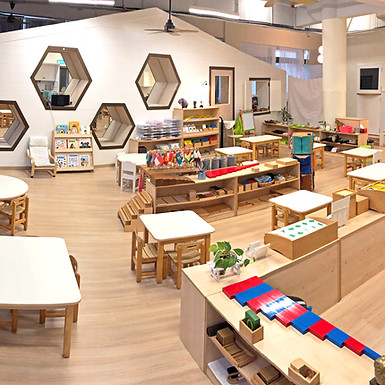
Physical Environment & Design
-
Child-sized furniture and tools
-
Materials are orderly and easy-to-locate help reduce confusion
-
Beauty and simplicity in design to minimize distractions and support deep focus
-
Calm, neutral, and nature-inspired colour tones to create a peaceful atmosphere
-
Clean, well-maintained, and inviting space
-
Toilet, eating, resting, and play areas are clearly designated to support smooth daily routines
Prepared Materials
-
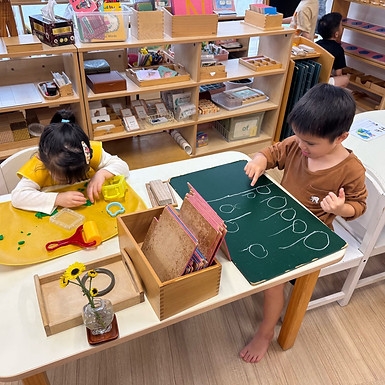
Hands-on, concrete learning materials
-
Self-correcting materials
-
Real, breakable materials (glass, ceramic, wood)
-
Each set of Montessori materials is grouped by area of learning and arranged from simple to challenging, helping children understand progression and build skills step by step.
-
Learning materials grow with the child, supporting early development through to academic readiness.
Child-Centered Approach
-
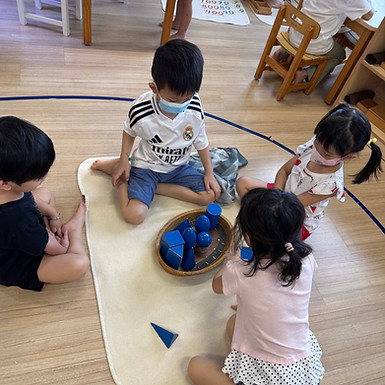
Mixed-age interaction
-
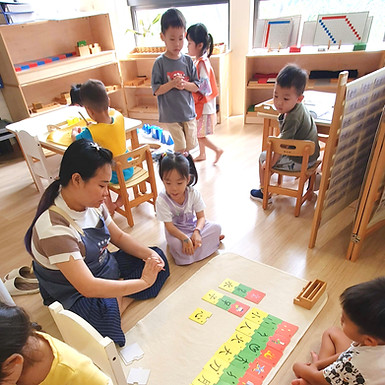
Balance between One-to-one learning & Peer learning
-
Respect for each child’s pace
-
Encourage independence skills & thinking
-
Build self-discipline: children have the freedom to follow their own interests, move freely, and choose their work, as long as their behaviour is reasonable and acceptable.
Role of the Adult
-
Teacher as a guide, not an instructor
-
Offer warmth, care, and trust
-
Careful observation before intervention
-
Respectful, calm and effective communication
-
Nurture each child’s intrinsic motivation
-
Individualized guidance based on readiness
-
Teachers guide and support each child’s growth across intellectual, physical, emotional, and social domains.

Social & Emotional Support
-
Culture of respect and kindness
-
Peaceful conflict resolution
-
Emotional safety and trust
-
Cooperation over competition